
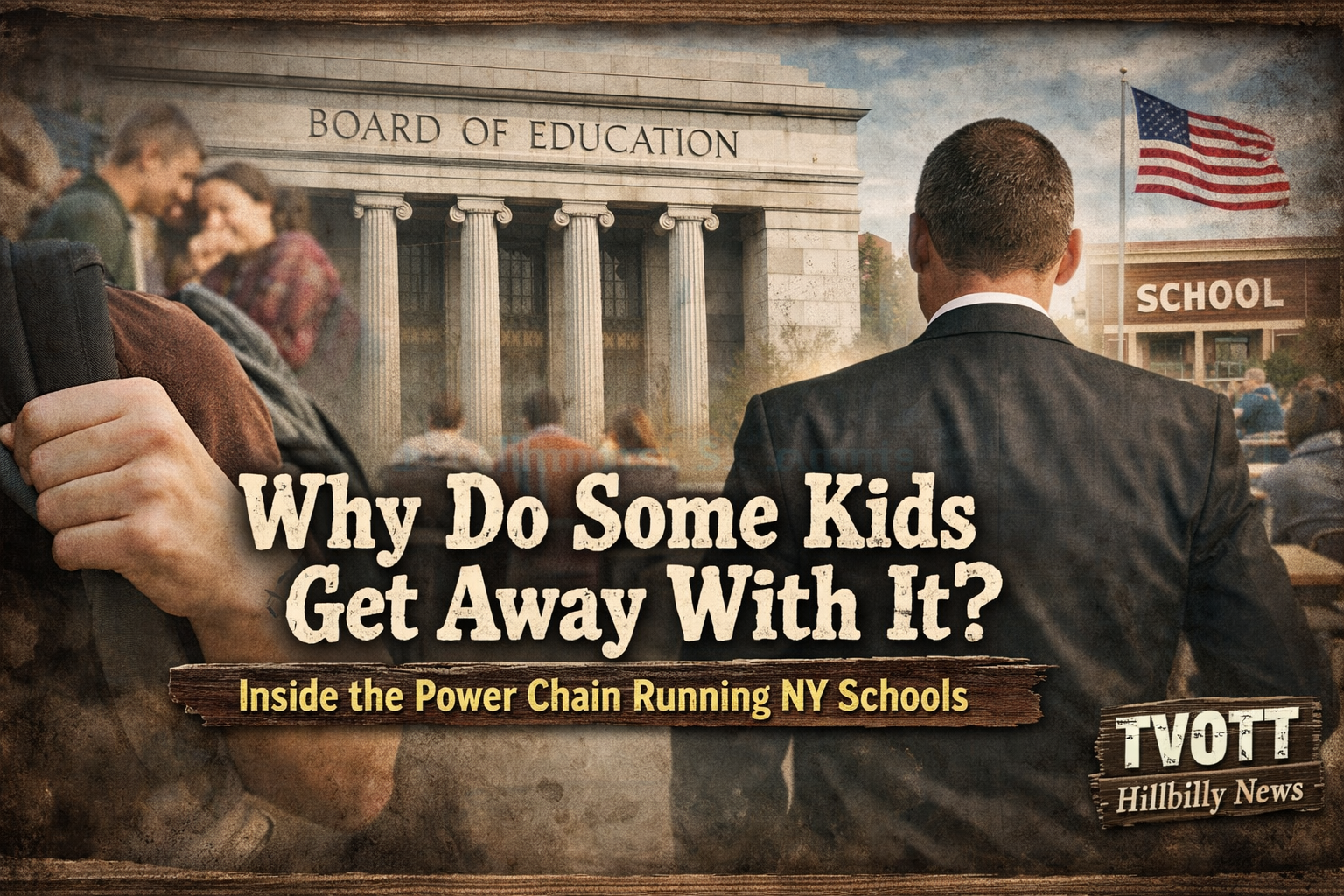
Let’s stop pretending this is just “kids being kids.”
Across New York, parents are raising the same concern over and over again—bullying complaints brushed off, discipline that doesn’t match the situation, and a growing feeling that some students get handled a whole lot differently than others.
So what’s really going on?
It starts higher up than most people think.
At the top of the ladder is the New York State Education Department and the New York State Board of Regents. They create the laws and policies every school has to follow, including the Dignity for All Students Act, which is supposed to protect students from harassment and bullying.
On paper, it sounds solid.
In reality, that’s just the starting point.
From there, the local Board of Education takes over. These are elected officials—people voted in by the community—who hire the superintendent and approve policies for the district. That superintendent then becomes the one running the entire operation, including hiring principals and setting the tone for how rules get enforced.
By the time it reaches the school building, it’s the principal and administration making the final calls.
And that’s where things start to feel uneven.
Because here’s the truth nobody likes to say out loud—schools are made up of people, and people have relationships.
In smaller communities especially, certain last names carry history. Families who’ve been around for generations, families connected to staff, families that are well-known or well-liked. That doesn’t automatically mean favoritism is happening—but it does mean those situations are handled differently more often than people want to admit.
Sometimes it’s subtle.
A conversation instead of a punishment.
A warning instead of a write-up.
A situation handled “quietly” instead of formally reported.
Other times, it’s pressure.
Some parents know exactly who to call, how to push back, and how to make noise. Schools, already worried about lawsuits, complaints, and reputation, may choose the path that causes the least resistance.
And then there’s the other side—families who don’t have those connections, don’t know the system, or don’t feel comfortable pushing back. When their kids are involved, consequences can feel quicker, harsher, and a lot more public.
That’s where the frustration comes from.
Because from the outside looking in, it doesn’t feel like a system built on fairness. It feels like a system built on who you know.
To be clear, not every school operates this way. There are administrators and teachers doing everything they can to treat students equally and follow the rules as written.
But when patterns start showing up—when multiple families start telling the same story—that’s when people stop calling it coincidence.
They start calling it a problem.
And here’s the part many don’t realize: the public actually has more power than they think.
School boards are elected. Superintendents answer to those boards. Policies can be challenged. Patterns can be documented. Pressure can be applied.
But it doesn’t happen by arguing in the hallway or fighting in Facebook comments.
It happens when people start going upstream—showing up to meetings, putting concerns in writing, and demanding consistent enforcement of the same rules for every student, no matter the last name.
Because at the end of the day, schools aren’t supposed to run on reputation.
They’re supposed to run on fairness.
Keep This Platform Alive We don’t have corporate money behind us. No big sponsors pulling strings. Just real news, real people, and a whole lot of grind. If you respect what we’re doing and want it to keep going, consider supporting us. Even a dollar helps keep the lights on and the stories flowing. Cash App: $tvotthillbillynews Or support us through the website If you can’t tip, sharing our posts helps just as much. This platform exists because of you. Period.
Sign in or create a free account to join the conversation.