
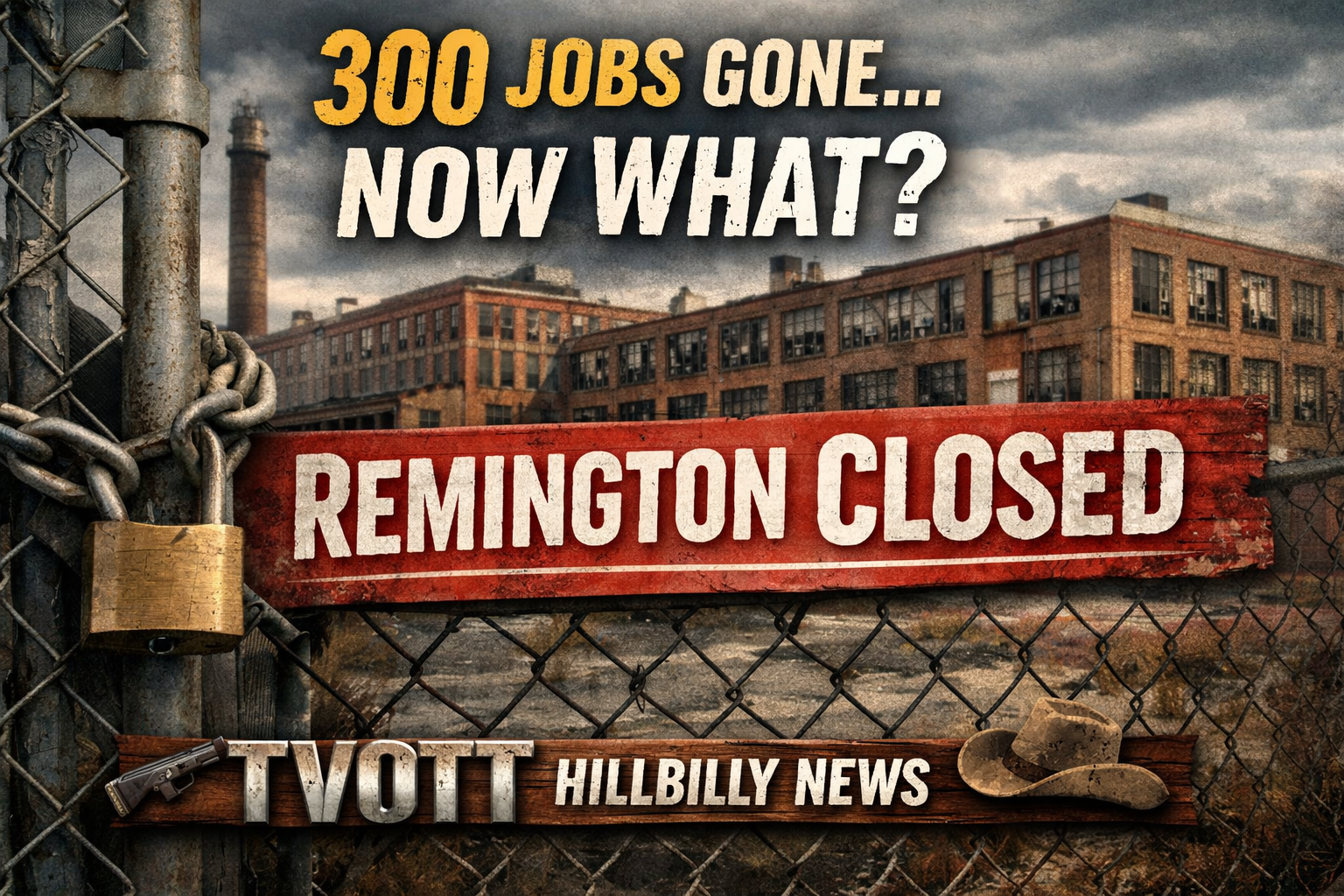
ILION, NY — For over 200 years, that factory stood like it wasn’t ever going anywhere.
Generations of families built their lives around it. You didn’t just work there—you expected your kids might too. It wasn’t just a job. It was stability. It was routine. It was pride.
Then March 2024 hit.
The doors shut at Remington Arms, and just like that, around 300 people were out of work. Not phased out. Not slowly replaced. Gone.
Now here we are.
Over a year later, officials announce a $500,000 grant tied to the site. Sounds like progress, right?
Except this money isn’t rebuilding anything. It’s not bringing jobs back tomorrow. It’s for planning. Studies. Environmental checks. Figuring out what could go there someday.
And that’s where people are getting fed up.
Because folks around here aren’t asking for fancy reports. They’re asking why nobody moved faster when the warning signs were already there. The company had financial problems. Ownership kept changing. Everyone knew it wasn’t stable.
So why wasn’t there a plan before the doors slammed shut?
That’s the question echoing across Ilion and the Mohawk Valley.
Some people say nothing could’ve stopped it. The company was already in trouble. Others say the state should’ve stepped in sooner, pushed harder, or lined up replacement jobs before things collapsed.
Either way, the result is the same.
Three hundred people had to figure out how to start over.
Local businesses lost customers. Families took hits. And a town that leaned on one major employer got reminded the hard way what happens when that support disappears.
Now the conversation is shifting to what comes next.
Leaders say the goal is to turn the old site into something new—something that could bring jobs back. Maybe manufacturing. Maybe something different entirely.
But nobody’s pretending this is a quick fix.
Turning a 200-year-old industrial site into something modern takes time. Cleanup. Investment. And a company willing to take a chance on a place that just lost its biggest employer.
So yeah, the $500K matters.
But to a lot of people, it feels like step one showed up after step ten was already too late.
And until jobs actually come back, that empty factory is going to keep reminding everyone of what was lost—and how fast it happened.
Sign in or create a free account to join the conversation.