
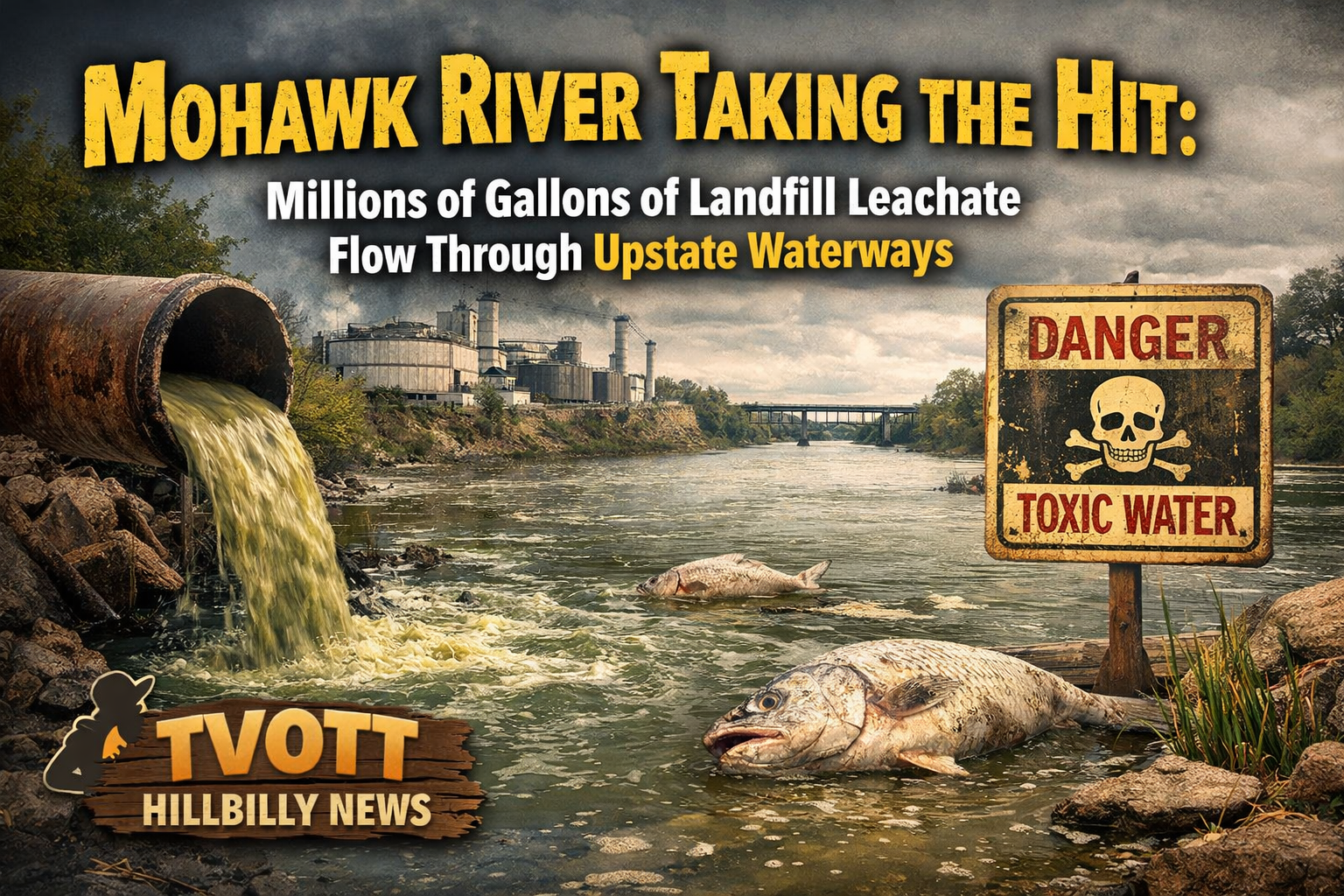
Alright folks… this one ain’t just a story—it’s a gut-check for everyone who drinks, fishes, or lives near the Mohawk River.
A growing environmental concern is making waves across Upstate New York, and it’s something most folks had no clue was happening behind the scenes.
We’re talking about landfill leachate—basically what happens when rainwater soaks through piles of garbage, picking up a nasty cocktail of chemicals, toxins, and industrial waste along the way. Think of it as straight-up “garbage juice”… and it’s not something you’d want anywhere near your drinking water.
But here’s where things get real messy…
💥 The Numbers Don’t Lie
Between 2019 and 2023, reports show that around 89 million gallons of landfill leachate were dumped EACH YEAR into the Mohawk and Hudson Rivers.
That includes about 31 million gallons flowing into the Mohawk River alone.
Let that sink in for a second.
Millions. Of. Gallons. Every. Year.
⚠️ The “Loophole” That’s Raising Eyebrows
Now here’s the part that’s got folks fired up…
This stuff isn’t being dumped straight from landfills into rivers—that would be illegal. Instead, it’s being sent to municipal wastewater treatment plants.
Problem is…
👉 Those plants aren’t built to remove many of the dangerous chemicals, especially things like PFAS—also known as “forever chemicals.”
So what happens?
That contaminated water gets “treated,” diluted, and released right into rivers—including the Mohawk.
Legal? Yes.
Smart? That’s where the debate gets loud.
🧪 What’s Actually In This Stuff?
Experts say landfill leachate can contain:
- Industrial chemicals
- Heavy metals
- Pharmaceuticals
- PFAS (linked to cancer and immune issues)
And here’s the kicker—many of these chemicals aren’t even regulated or tested for properly yet.
So we’re basically playing catch-up while it’s already flowing downstream.
🚰 Who’s Affected?
This isn’t just about fish and scenery.
The Mohawk and Hudson Rivers are drinking water sources for over 250,000 people, with many more partially relying on them.
That means what’s going into these rivers…
👉 eventually ends up coming out of someone’s tap.
🗣️ What Officials & Advocates Are Saying
Environmental groups are calling this a “leachate loophole”—a gap in regulations that lets this process continue legally.
They argue:
- Wastewater plants shouldn’t accept this toxic liquid
- Landfills should treat it on-site before it ever leaves
- Regulations need to catch up with modern chemical risks
Meanwhile, regulators have acknowledged concerns, but real change? Still in progress.
🧠 The Bottom Line (Hillbilly Truth Talk)
Now let’s keep it real for a second…
You’ve got a system where:
- Toxic waste can’t go directly into rivers
- BUT it can go to a plant that can’t clean it…
- THEN get dumped anyway
That ain’t common sense—that’s paperwork gymnastics.
Nobody’s saying the sky is falling tomorrow… but ignoring it?
That’s how problems turn into disasters.
Sign in or create a free account to join the conversation.